

Toys and Fidgets for Autism can help support calming, focus, sensory regulation, busy hands, oral sensory needs, and smoother daily routines.
Toys and Fidgets for Autism
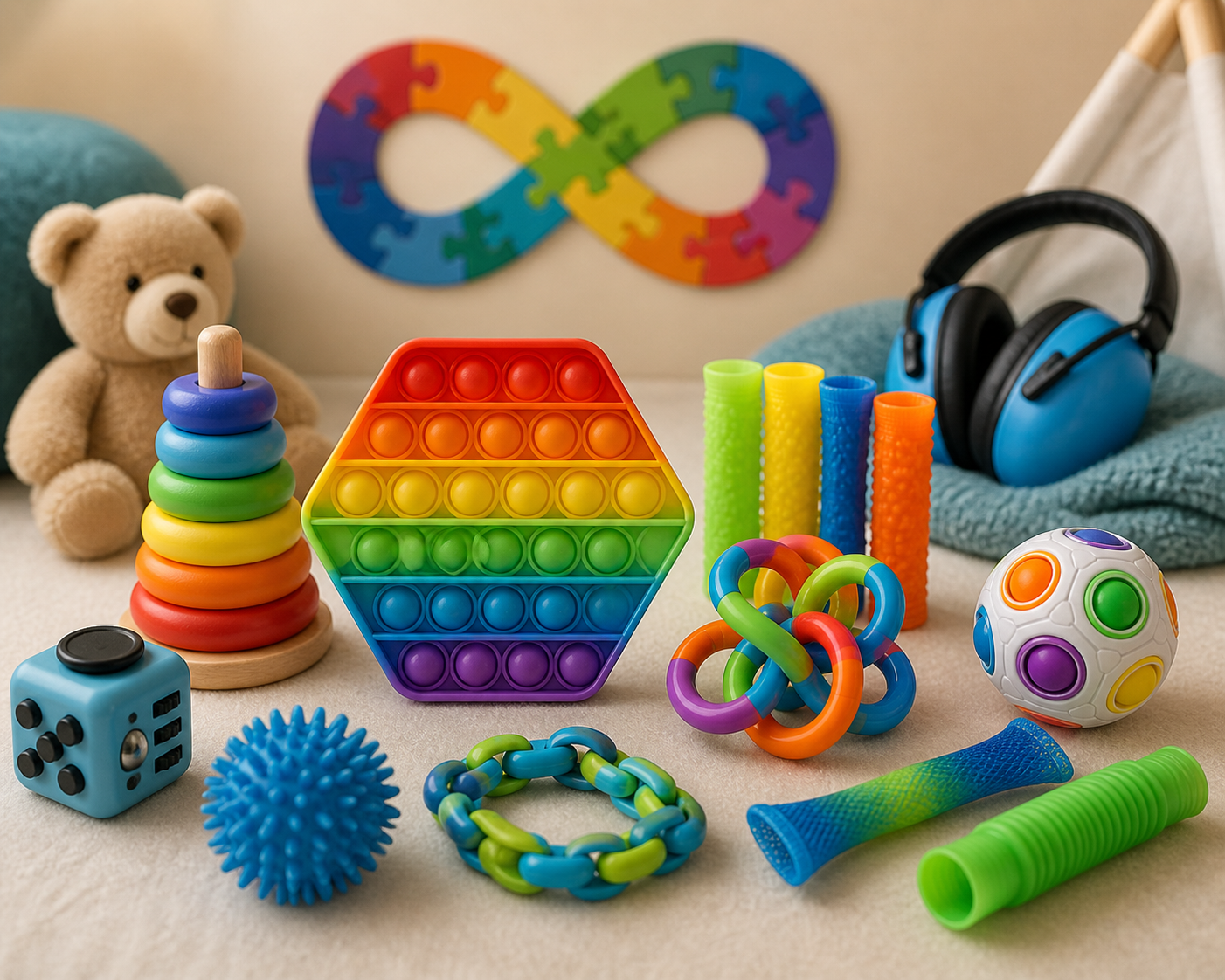
Toys and Fidgets for Autism can help autistic children feel calmer, more focused, and better supported during school, home routines, travel, waiting rooms, and sensory-heavy moments.
Toys and Fidgets for Autism Guide
Toys and Fidgets for Autism can give children a safe way to use their hands, release extra energy, explore texture, receive pressure, and feel more regulated during school, travel, quiet time, waiting rooms, therapy appointments, or overwhelming moments. For many autistic children, sensory play is not just play. It can be part of how they calm their body, organize their thoughts, and feel more secure.
These tools do not replace therapy, medical care, or professional support, but they can be useful everyday supports for families. According to the CDC autism treatment and support overview, support plans may include approaches that help with behavior, communication, daily skills, and development.
You may also want to visit our Sensory Tools, Sensory Rooms, and Noise Canceling Headphones pages.
Why Toys and Fidgets for Autism Help
Toys and Fidgets for Autism may help because many autistic children seek sensory input throughout the day. Some children need movement. Some need pressure. Some need oral sensory input. Some need texture. Others need a quiet object in their hands so they can listen, wait, or transition without becoming overwhelmed.
A good fidget should support the child instead of creating more distraction. A toy that works during calm play may not work during schoolwork. A toy that helps at home may be too noisy for a classroom. The best choice depends on the child, the setting, and the type of sensory input the child is seeking.
Safe Toys and Fidgets for Autism Tips
Safe Toys and Fidgets for Autism should match the child’s age, chewing habits, strength, and supervision needs. Check for small parts, loose pieces, sharp edges, worn chew tools, or toys that break easily. If a child mouths objects, avoid tiny pieces and choose items designed for that type of sensory need.
Toys and Fidgets for Autism work best when they help a child feel calmer, not more overwhelmed. If a toy becomes too loud, too exciting, or too distracting, try a softer, quieter, slower option.
Pop-It Toys
Helpful for repetitive motion, quiet hand activity, and simple sensory play.
Fidget Spinners
Best for children who enjoy movement, spinning, and visual focus.
Stress Balls
Soft squeeze tools that may provide calming pressure for busy hands.
Tangle Toys
Twisting tools that may support focus through gentle repetitive motion.
Sensory Slime
Texture-based play for children who enjoy tactile sensory input.
Fidget Sets
Variety packs that let families test different sensory preferences.
How to Choose Toys and Fidgets for Autism
Choosing Toys and Fidgets for Autism starts with watching what the child naturally does. A child who squeezes pillows, presses into furniture, or seeks hugs may like pressure-based tools. A child who twists objects, taps fingers, or moves constantly may prefer movement fidgets. A child who chews shirts, pencils, or toys may need safer oral sensory options.
Safety matters. Choose age-appropriate items, avoid small parts for children who mouth objects, check for choking hazards, inspect toys often, and supervise when needed. If a child becomes more upset, wild, or distracted with a toy, switch to a calmer option.
Chewable Toys and Fidgets for Autism
Some autistic children seek oral sensory input. This may look like chewing on clothing, pencils, toys, fingers, blankets, or other everyday objects. Chewable sensory tools are designed to give children a safer and more appropriate way to meet that need.
Chew necklaces, chew tubes, and chewable fidgets may help during school, car rides, therapy appointments, homework, or stressful transitions. Always choose chew tools based on the child’s age, chewing strength, and supervision needs.
Chew Necklaces
Wearable sensory tools for children who need safer oral input during the day.
Chewable Sensory Toys
Helpful alternatives for children who chew clothing, pencils, or unsafe objects.
Chew Tubes
Durable oral sensory tools that may support calming, focus, and regulation.
Keep It Accessible
Place fidgets where they are easy to reach during homework, car rides, calm-down time, or transitions.
Try Different Types
Movement, texture, pressure, and oral sensory tools meet different sensory needs.
Watch for Overstimulation
If a toy creates more distraction, switch to a quieter, softer, slower, or simpler option.
Best Fidgets for Different Sensory Needs
Children who seek pressure may prefer stress balls, therapy putty, squeeze toys, or soft weighted items. Children who seek movement may enjoy spinners, tangles, stretchy toys, or pop-it toys. Children who enjoy texture may respond well to slime, textured balls, sensory pads, or soft fabric-based items.
Sound-sensitive children may need quiet fidgets instead of clicking toys. Children who become overstimulated by bright colors or fast movement may do better with soft, simple, slower tools. Children who struggle with waiting may benefit from a small sensory kit kept in a backpack, car, therapy bag, or calm-down basket.
When to Use Fidget Toys
Fidget toys may be helpful during waiting rooms, car rides, homeschool activities, therapy appointments, quiet time, church, restaurants, haircuts, doctor visits, or transitions between activities. They can also be placed inside a sensory room, calm-down corner, or bedtime routine basket.
Toys and Fidgets for Autism can also work well with other supports. If your child struggles with sound sensitivity, visit our Noise Canceling Headphones page. For more calming ideas, visit our Sensory Tools guide. For home setup ideas, visit our Sensory Rooms page.
Using Toys and Fidgets for Autism at School
Toys and Fidgets for Autism may be useful at school when they are quiet, safe, and matched to the child’s needs. A classroom fidget should help the child listen, wait, focus, or stay regulated without distracting other students. Soft squeeze tools, silent tangles, textured strips, and simple hand fidgets are often easier to use in learning settings than loud or flashy toys.
If a child has an IEP or school support plan, families can ask whether sensory tools, breaks, or calm-down supports may be included. You can learn more on our IEP Help page.
Shop Toys and Fidgets for Autism
Toys and Fidgets for Autism can support calming, focus, sensory regulation, oral sensory needs, and everyday comfort when they are chosen carefully.
Shop Fidgets & ToysAs an Amazon Associate, I earn from qualifying purchases.