

Daily Living Skills help autistic children build independence with dressing, hygiene, eating, toileting, routines, and simple support at home.
Daily Living Skills
Daily Living Skills help children build independence step by step with patience, support, visual routines, and real-life practice.
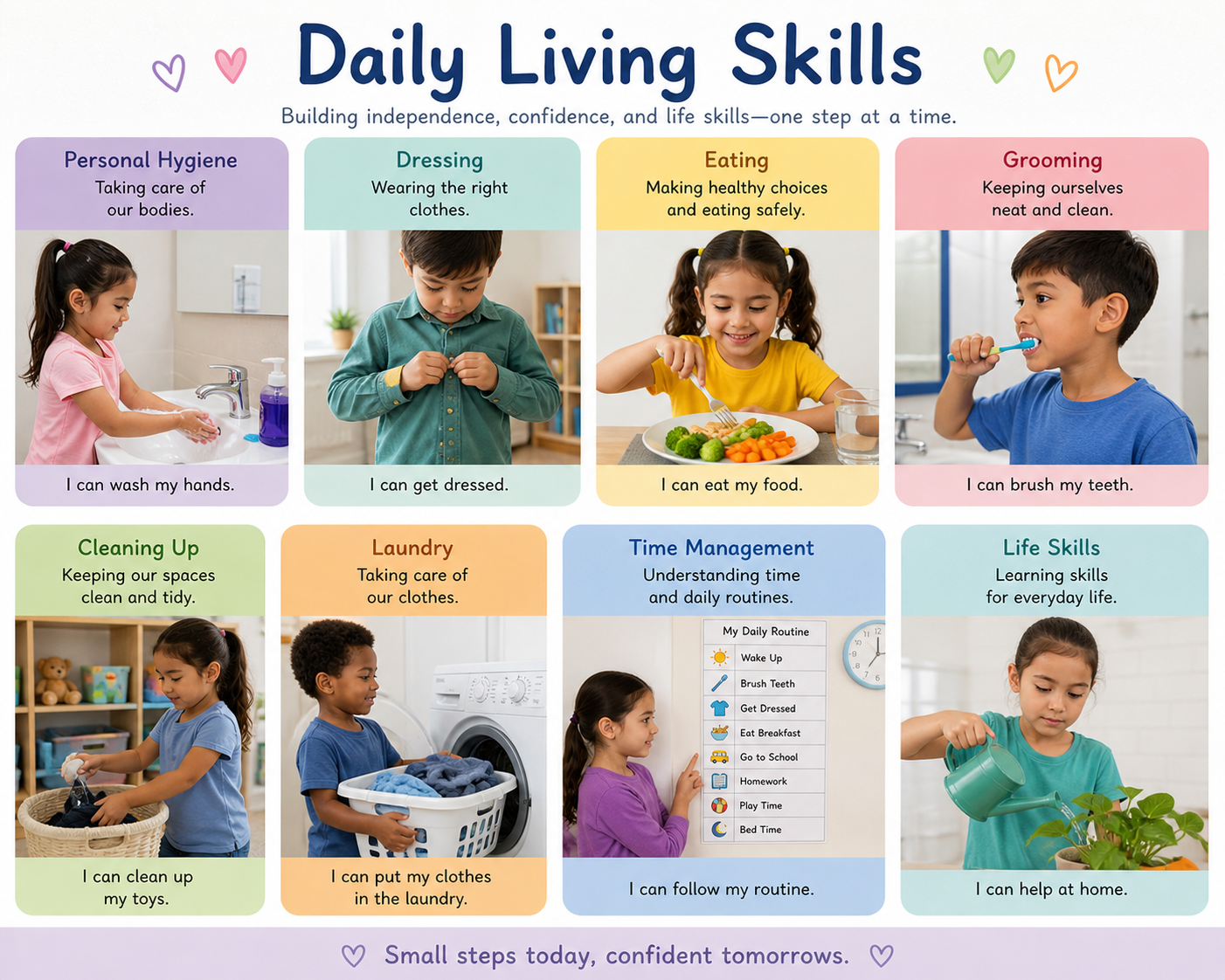
Daily Living Skills Build Independence
Daily Living Skills are everyday tasks children use to care for themselves and participate in family life. These skills include getting dressed, brushing teeth, washing hands, eating meals, using the bathroom, following a morning routine, cleaning up toys, and preparing for bedtime.
For autistic children, these skills may take longer to learn because each task can include sensory, motor, communication, and routine challenges. A child may understand what needs to happen but still struggle with the steps, textures, sounds, timing, or transitions involved.
Progress does not have to be fast to matter. A child putting on one sock, tolerating a toothbrush for a few seconds, washing hands with help, or sitting at the table for one extra minute can all be meaningful progress.
Examples of Daily Living Skills
Dressing
Putting on clothes, choosing outfits, managing buttons, zippers, socks, shoes, and sensory-friendly clothing.
Hygiene
Brushing teeth, washing hands, bathing, hair care, nail care, and personal cleanliness routines.
Eating
Using utensils, sitting at the table, trying foods, drinking from cups, and managing mealtime expectations.
Toileting
Recognizing the need to go, using the toilet, wiping, flushing, washing hands, and following bathroom steps.
Why Daily Living Skills Can Be Hard
- Sensory discomfort from clothes, water, toothpaste, soap, smells, or food textures
- Difficulty understanding steps in the correct order
- Communication challenges when asking for help
- Motor coordination difficulties with buttons, zippers, utensils, or toothbrushes
- Fear of change, new routines, or unfamiliar expectations
- Overwhelm from too many instructions at once
Important
If a child resists a task, it may not be defiance. It may be confusion, discomfort, fear, sensory overload, or not knowing what to do next.
How to Teach Daily Living Skills
Break It Down
Turn one task into small steps, such as pick up toothbrush, add toothpaste, brush, rinse, and put it away.
Use Visuals
Pictures, charts, labels, and step-by-step visuals can make daily routines easier to understand.
Practice Daily
Repetition builds confidence. Practicing at the same time each day can make routines feel safer.
Celebrate Effort
Even small attempts matter. Praise effort, cooperation, and progress instead of expecting perfection.
Make Daily Living Skills Easier
Small adjustments can make Daily Living Skills easier for autistic children. If a task feels too hard, it often helps to change the environment instead of forcing the child through stress. Softer clothing, fewer instructions, a calmer bathroom, predictable timing, and visual supports can reduce overwhelm.
Daily Living Skills and Sensory Needs
Sensory needs can affect almost every daily task. Brushing teeth may feel painful because of taste, foam, vibration, or mouth sensitivity. Getting dressed may be hard because tags, waistbands, seams, socks, or tight sleeves feel uncomfortable. Bathing may be stressful because of water temperature, loud drains, slippery floors, or the feeling of water on the face.
Instead of assuming the child is refusing, try looking for the sensory problem inside the task. A different toothbrush, softer clothing, unscented soap, a visual timer, a quieter bathroom, or a slower routine may make the skill easier to practice.
Daily Living Skills Should Be Practiced Slowly
Daily Living Skills are easier to teach when the child is calm, not already upset. Practice during peaceful times first. For example, you can practice pulling up socks during playtime before expecting it during a rushed school morning. You can practice brushing with a dry toothbrush before adding toothpaste. You can practice sitting at the table for a short time before expecting a full meal.
The goal is to build confidence. Some children need hand-over-hand support, modeling, pictures, verbal prompts, or rewards. Others need extra time and fewer words. Teaching slowly does not mean giving up. It means helping the child succeed one step at a time.
Helpful Daily Living Products
These products do not replace teaching or therapy, but they may help support independence, routine, comfort, and daily success at home.
Visual Schedules
Helpful for morning routines, bedtime routines, hygiene steps, and transitions.
Step Stools
Support independence for brushing teeth, washing hands, and bathroom use.
Adaptive Clothing
Clothes designed for easier dressing, comfort, and reduced sensory irritation.
Toothbrush Timers
Can help children understand how long to brush and stay on task.
Real Help & Resources
Autism Guides
Explore more simple support guides for communication, behavior, routines, and sensory needs.
Sensory Tools
Find calming tools that may support regulation, comfort, focus, and daily routines.
Understanding Autism
Learn more about autism, sensory differences, communication, and family support.
CDC Autism Support
Read trusted information about autism treatment, support, and therapies.
Small Steps Build Daily Living Skills
Daily Living Skills do not happen overnight. Every attempt, every practice moment, and every small success can help a child build confidence over time. The goal is not perfection. The goal is steady support, patience, and helping the child become more comfortable with everyday life.
This content is for informational purposes only and is not a substitute for medical, occupational therapy, educational, or professional advice.