

Sleep support tips can help create calmer nights, reduce stress, and support better sleep routines for children in sensory-friendly environments.
Sleep Support Tips
Simple, supportive strategies to help create calmer nights and more restful sleep.
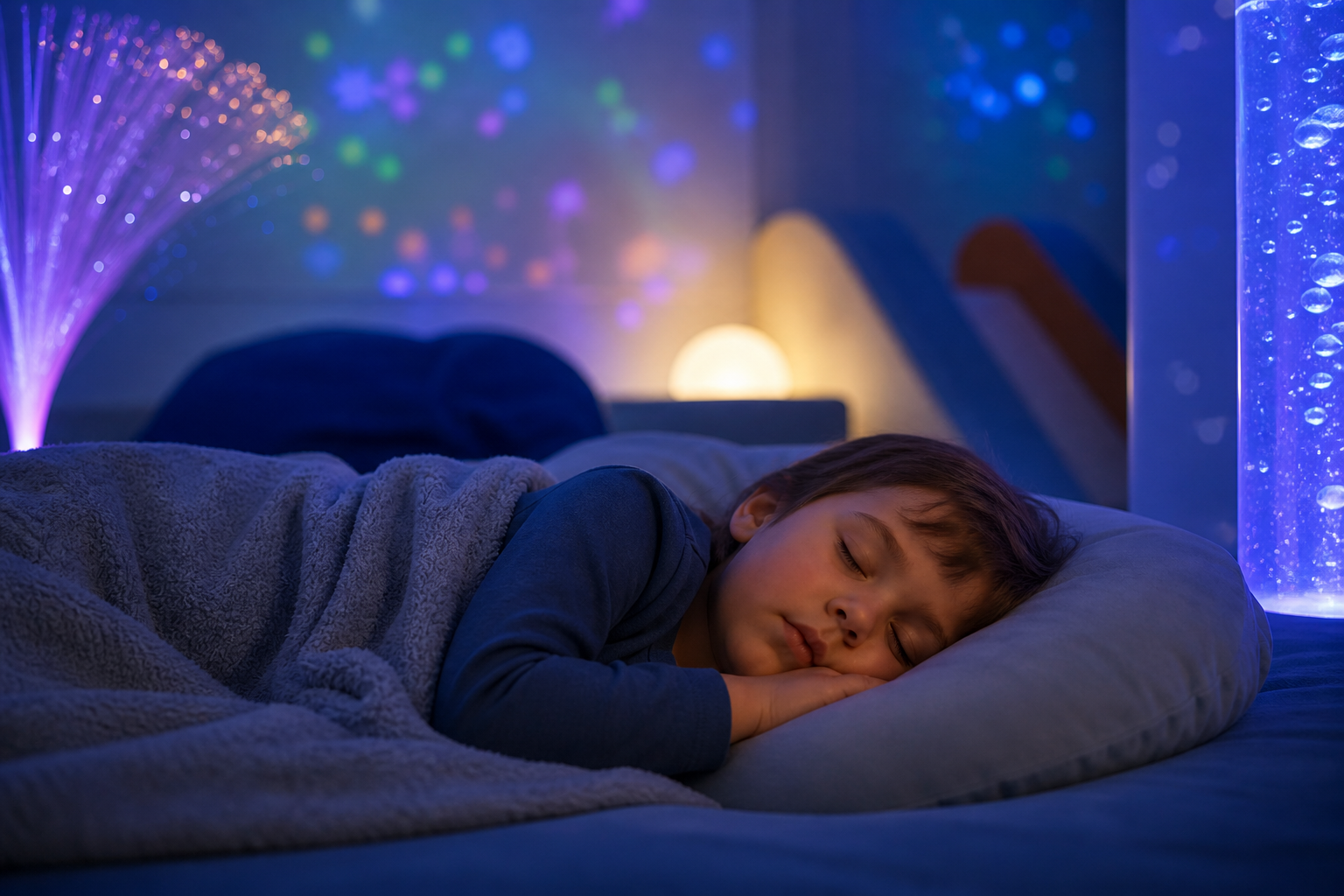
Why Sleep Can Be Challenging
Sleep challenges are common, especially for children who experience sensory sensitivities, anxiety, or difficulty with transitions. These factors can make bedtime feel overwhelming instead of calming, leading to resistance, frequent waking, or difficulty falling asleep.
These sleep support tips focus on reducing stimulation, increasing comfort, and building predictable routines. Over time, consistency and a supportive environment can help the body recognize when it is time to relax and rest.
The goal is not perfect sleep every night. The goal is creating a safe, calm experience that supports gradual improvement and helps bedtime feel less stressful for both the child and the caregiver.
Build a Simple Routine with Sleep Support Tips
🛁 Wind Down
Start with calming activities like a warm bath, quiet play, or reading to help the body transition into rest mode.
📖 Same Steps Nightly
Repeating the same bedtime routine builds a sense of safety and predictability.
⏰ Consistent Time
Going to bed at the same time each night helps regulate internal sleep rhythms.
🔁 Gentle Repetition
Consistent patterns help signal the brain that it is time to relax and prepare for sleep.
One of the most effective sleep support tips is keeping routines simple and repeatable. The more predictable bedtime becomes, the easier it is for the body to respond naturally to those cues.
Create a Calming Environment
The sleep environment plays a major role in how easily a child can fall asleep. Bright lights, loud sounds, or cluttered spaces can increase stimulation and make it harder to relax.
A calming sleep space may include dim lighting, soft textures, and minimal noise. Some children respond especially well to sensory-friendly environments that include gentle lighting, calming visuals, or soothing sounds.
Enclosed spaces like sleep tents, canopy beds, or sensory corners can provide a feeling of safety. This sense of security is one of the most overlooked but powerful sleep support tips.
Calm environment = calmer sleep.
Reduce Stimulation Before Bed
📱 Limit Screens
Reducing screen time before bed supports natural sleep cycles and relaxation.
🔊 Lower Noise
A quieter environment reduces sensory overload and helps the mind settle.
💡 Dim Lighting
Lower lighting signals the body that it is time to wind down.
⚡ Avoid High Energy Play
Switching to calm activities prevents overstimulation before bedtime.
These sleep support tips work best when used consistently. Even small changes, like dimming lights earlier, can make a noticeable difference over time.
Use Comfort Supports
Comfort tools can play a big role in helping children feel relaxed and secure. Weighted blankets, soft bedding, and calming sounds can help regulate the nervous system.
Some children benefit from compression sheets, body pillows, or sensory-friendly sleep setups that provide gentle pressure and a feeling of safety.
Choosing the right comfort support is not about adding everything — it’s about finding what works best for the individual child and keeping the environment simple and soothing.
Comfort helps the body relax.
Helpful Sleep Mindset
Be Patient
Sleep improvements take time and consistency.
Watch Patterns
Observe what helps and what increases stress before bed.
Adjust Slowly
Small changes are more effective than large sudden adjustments.
One of the most important sleep support tips is giving the process time. Building better sleep habits is gradual, and consistency matters more than perfection.
You’re Not Doing It Wrong
Sleep challenges are very common and do not mean you are doing anything wrong. With the right environment, routines, and support, bedtime can become calmer and more manageable.
For additional guidance on healthy sleep habits, visit Sleep Foundation.