Noise Canceling Headphones can help autistic children, teens, and adults reduce sound overload and feel calmer in loud environments.
Noise Canceling Headphones
Noise Canceling Headphones can be a helpful sensory support tool for children, teens, and adults who feel overwhelmed by loud, sudden, or crowded environments. They do not treat autism, but they may help soften sound, reduce stress, and create a calmer space when noise feels too big.
Why Noise Canceling Headphones Can Help
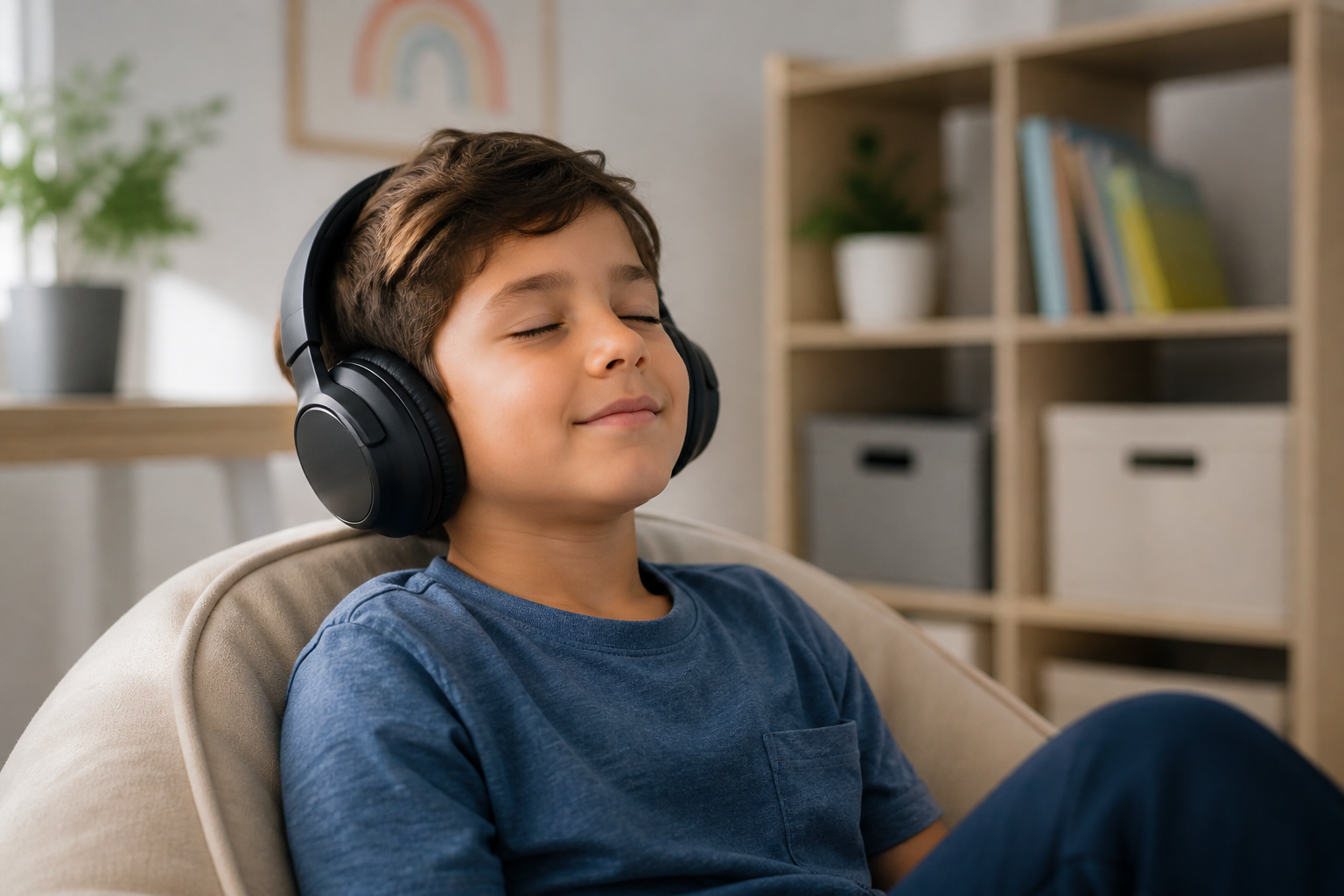
Noise Canceling Headphones may help reduce sensory overload by softening sounds that feel too loud, sharp, sudden, or unpredictable. For some autistic children, everyday places like stores, school events, restaurants, playgrounds, gyms, waiting rooms, and family gatherings can feel overwhelming because the sound is constant and hard to escape.
Some children can hear the hum of lights, the scrape of chairs, the buzz of appliances, background talking, hand dryers, alarms, music, or sudden shouting more intensely than others. When sound becomes too much, the child may cover their ears, cry, run away, shut down, scream, refuse to enter a place, or become unable to follow directions.
Noise Canceling Headphones give the child a tool that supports comfort before overwhelm builds. The goal is not to block the world completely. The goal is to help the child feel safe enough to participate in daily routines.
Less Noise
Helpful for busy stores, school events, restaurants, travel, appointments, and crowded places.
More Calm
May help the body feel safer when sounds are causing stress, panic, or sensory overload.
More Control
Gives children and adults a simple support tool they can use before sound becomes too much.
When Noise Canceling Headphones May Be Helpful
Noise Canceling Headphones may be useful before, during, or after loud situations. Some children need them only in very loud places, while others may use them during normal daily routines. The best time to offer them is usually before a meltdown begins, not after the child is already overwhelmed.
- Grocery stores, shopping centers, and errands
- School assemblies, cafeterias, gyms, daycare, or appointments
- Restaurants, birthday parties, churches, and family gatherings
- Fireworks, storms, concerts, parades, or loud community events
- Travel by car, plane, airport, bus, or train
- Before a meltdown when noise is becoming too much
- During homework or quiet time if background sound is distracting
What to Look For in Noise Canceling Headphones
Choosing Noise Canceling Headphones for autism support depends on comfort, fit, age, sensitivity, and how the child reacts to pressure around the ears or head. Some children prefer earmuff-style hearing protection because it feels simple and blocks sound without music or Bluetooth. Others prefer softer headphone styles that feel lighter.
Comfort
Soft ear cushions and an adjustable band matter, especially for kids who dislike pressure.
Noise Reduction
Look for headphones or earmuffs made to reduce loud environmental noise safely.
Fit
Some children prefer lightweight earmuffs, while teens or adults may prefer headphone styles.
How to Introduce Headphones Gently
Some autistic children love headphones right away. Others need time. If a child refuses them, that does not mean headphones will never help. It may mean the pressure, fit, size, texture, or timing does not feel right yet.
Try placing the headphones nearby without forcing them. Let the child touch them, hold them, or wear them for a few seconds at home. Pair them with calm moments first, not only stressful ones. A child may be more willing to try them during play, quiet time, or a favorite video before using them in a noisy place.
Headphones should feel like support, not punishment. Giving the child choice helps build trust.
Best Noise Canceling Headphones Options to Consider
These product categories are a helpful starting point when choosing auditory support tools. Families may need to try more than one style before finding what feels comfortable.
Noise Support at School and in Public
Noise Canceling Headphones can also be written into a school plan when a child needs auditory support. Parents can ask whether headphones, sensory breaks, quiet seating, reduced noise exposure, or a calm area can be included as accommodations. These supports may help a child participate without being pushed past their limit.
In public places, headphones can reduce judgment and stress because they give the child a visible support tool. Instead of waiting until sound causes panic, families can prepare ahead of time. Keeping headphones in a backpack, car, diaper bag, or school cubby can make loud situations easier to handle.
Helpful Autism Sound Sensitivity Resources
Families who want to better understand sound sensitivity can also review trusted autism and sensory support information. The CDC provides general autism treatment and support information, and your child’s doctor, occupational therapist, school team, or therapist may help you decide which tools fit your child’s needs.
Gentle Reminder
Related Support Pages
Small Support Can Make Loud Days Easier
Noise Canceling Headphones can help create a calmer space when sound feels too big. With the right fit, gentle practice, and patient support, loud days may become easier for autistic children, teens, adults, and families.
See Headphone Options