

Autism and Picky Eating can involve sensory food refusal, gagging, safe foods, texture struggles, anxiety, and mealtime stress for children and families.
Autism and Picky Eating
Understanding food refusal, gagging, safe foods, sensory textures, and gentle ways to help children explore food without pressure.
Autism and Picky Eating Is Not Just Being Difficult
Autism and picky eating can be one of the most stressful and emotional parts of parenting. When a child refuses food, gags, avoids textures, or only eats a few safe foods, it can feel scary and heartbreaking.
If you are dealing with Autism and Picky Eating, you are not alone. Your child is not being difficult on purpose. Their body may be experiencing food in a completely different way.
Why Autism and Picky Eating Happens
Autism and Picky Eating are often misunderstood. Many people hear “picky eating” and assume a child is being stubborn, spoiled, or difficult. But for many autistic children, food refusal is connected to sensory processing, anxiety, oral sensitivity, texture discomfort, smell sensitivity, and fear.
Food is not just taste. Food has texture, smell, temperature, color, shape, sound, and mouth feel. A food that seems simple to one person may feel overwhelming or unsafe to an autistic child.
A child may refuse food because the texture feels wrong, the smell is too strong, the temperature feels uncomfortable, or the food looks different than expected. Even a change in brand, packaging, shape, or preparation can make a previously safe food feel unsafe.
Why Some Autistic Children Gag or Refuse Food
One of the most upsetting parts of Autism and Picky Eating is gagging. Gagging can happen suddenly, even with foods that seem harmless. This is not fake. It is not drama. It is not bad behavior.
Many autistic children have a sensitive gag reflex or strong oral sensory response. Certain textures can trigger the body before the child even has time to think. Soft chunks, mixed textures, sticky foods, strong smells, or unexpected temperatures may cause an automatic reaction.
- Mixed textures, such as soft foods with chunks
- Strong smells or unfamiliar flavors
- Sticky, slimy, chewy, or mushy foods
- Foods that look different than expected
- Changes in brand, packaging, color, shape, or crunch
- Foods that require more chewing effort
Safe Foods Matter With Autism and Picky Eating
Safe foods are foods a child trusts. They are predictable. They taste, smell, look, and feel the way the child expects. For many autistic children, safe foods are not a preference — they are what make eating possible.
A child may eat the same crackers, nuggets, cereal, yogurt, pasta, chips, fruit snacks, or dry foods every day because those foods feel safe. The sameness matters. The exact brand may matter. The texture may matter. The shape may matter.
Removing safe foods too quickly can increase anxiety and may cause a child to eat even less. Instead of taking safe foods away, many families do better by keeping safe foods available while gently introducing new textures and foods without pressure.
Sensory Food Bowls for Autism and Picky Eating
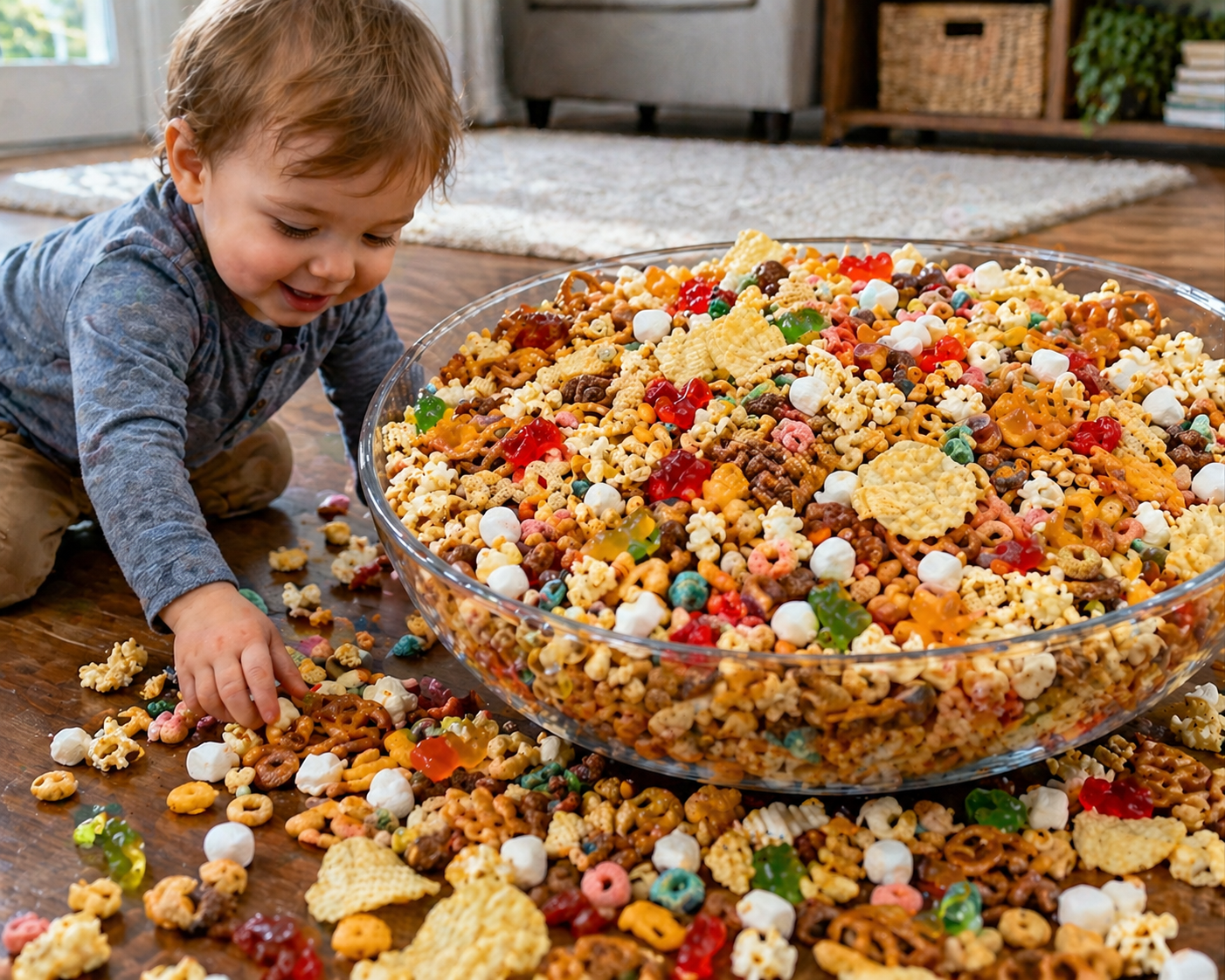
One helpful idea for Autism and Picky Eating is creating a sensory food bowl. This gives a child a safe way to explore different food textures without pressure to eat.
You can use a bowl, tray, muffin tin, or divided plate and fill it with dry foods that have different textures. Ideas include cereal, pretzels, Goldfish, crackers, veggie straws, marshmallows, potato chips, freeze-dried fruit, gummies, dry cereal pieces, rice cakes, or other safe foods your child can handle.
The goal is not to force eating. The goal is exploration. Let your child touch, sort, pick up, move, smell, stack, or feel the foods with their hands. Many autistic children need to experience food with their hands before they feel safe putting it in their mouth.
A sensory food bowl also helps parents learn what their child naturally prefers. You may notice your child reaches for crunchy foods, avoids sticky textures, prefers dry foods, or becomes curious about certain shapes. That information can help you understand what kinds of foods may be easier to introduce later.
Common Food Texture Patterns
Crunchy Foods
Some children prefer crunchy foods because the texture feels predictable and clear in the mouth.
Soft Foods
Some children prefer smooth foods, while others avoid them because they feel too mushy or uncertain.
Chewy Foods
Chewy foods may be comforting for some children and overwhelming for others.
What Not to Do With Autism and Picky Eating
Pressure usually makes Autism and Picky Eating worse. When a child feels forced, tricked, punished, or watched too closely, meals can become scary. Once fear is attached to food, it can be much harder to rebuild trust.
- Do not force bites during gagging or distress
- Do not shame a child for having safe foods
- Do not hide unwanted foods without understanding the fear
- Do not turn every meal into a battle
- Do not assume refusal means defiance
- Do not remove all safe foods at once
What Actually Helps Autism and Picky Eating
The most helpful approach is built on safety, trust, and tiny steps. Progress may look slow at first. A child may need to tolerate a food on the table before touching it. Then they may touch it before smelling it. Then they may smell it before licking it. All of that can be progress.
- Keep safe foods available
- Offer new foods without pressure
- Let the child explore food with hands first
- Introduce tiny changes slowly
- Use predictable meal routines
- Celebrate calm exposure, not just eating
- Watch for texture patterns and preferences
When Autism and Picky Eating Becomes a Medical Concern
Sometimes Autism and Picky Eating becomes more than a difficult phase. If a child is losing weight, eating very few foods, gagging often, choking, vomiting, refusing entire food groups, or struggling to get enough nutrition, it is important to ask for professional support.
A pediatrician, feeding therapist, occupational therapist, or qualified healthcare provider can help look for medical, sensory, oral motor, or nutritional concerns. Needing feeding support does not mean a parent failed. It means the child may need more help.
Helpful Support Tools for Autism and Picky Eating
Some families find that sensory supports help meals feel calmer. This may include divided plates, child-safe utensils, visual schedules, calm seating, sensory tools before meals, or quiet routines around eating.
If your child struggles with sensory overwhelm outside of eating, visit our Sensory Tools page, Toys and Fidgets page, or our full Autism Guides collection.
Explore Sensory ToolsYou Are Not Alone With Autism and Picky Eating
Watching a child struggle to eat can be one of the most heartbreaking parts of autism. It is emotional because food is connected to health, growth, comfort, and safety. When a child will not eat, it can make parents and grandparents feel helpless.
But your child is not trying to make life hard. They may be trying to protect themselves from sensations that feel overwhelming. Progress can happen, but it usually happens through patience, trust, and gentle exposure.
Start with safety. Watch what your child naturally chooses. Learn their texture patterns. Keep safe foods available. Let exploration happen without pressure. One small step still counts.