

Types of Autism Stimming: 7 Common Types can include repeated movements, sounds, visual actions, touch-based behaviors, and sensory-seeking actions that help autistic children and adults regulate emotions, focus, and sensory input.
Types of Autism Stimming: 7 Common Types
Types of Autism Stimming: 7 Common Types can help parents understand how different stimming behaviors support sensory and emotional regulation.
Types of Autism Stimming: 7 Common Types Explained
Types of Autism Stimming: 7 Common Types can look different from one person to another. Stimming is short for self-stimulatory behavior. It usually means repeated movements, sounds, actions, or sensory behaviors that help a person regulate their body and emotions.
Types of Autism Stimming: 7 Common Types are not automatically bad. Many autistic people stim to feel calmer, safer, more focused, or more comfortable in their environment. Some stimming happens during stress, while other stimming happens during excitement, happiness, boredom, or deep concentration.
If you are new to this topic, start with What Is Autism Stimming. You can also read about Sensory Overload and Behavior Support to better understand why stimming may happen.
1. Movement Stimming
Movement stimming includes rocking, bouncing, pacing, jumping, spinning, or hand flapping. This type of stimming may help the body release energy, handle excitement, or feel grounded.
2. Vocal Stimming
Vocal stimming includes humming, repeating words, making sounds, scripting, clicking, or repeating phrases. Some children use vocal stimming to calm themselves or process language.
3. Visual Stimming
Visual stimming may include watching spinning objects, staring at lights, moving fingers near the eyes, lining up items, or focusing on patterns that feel soothing.
4. Tactile Stimming
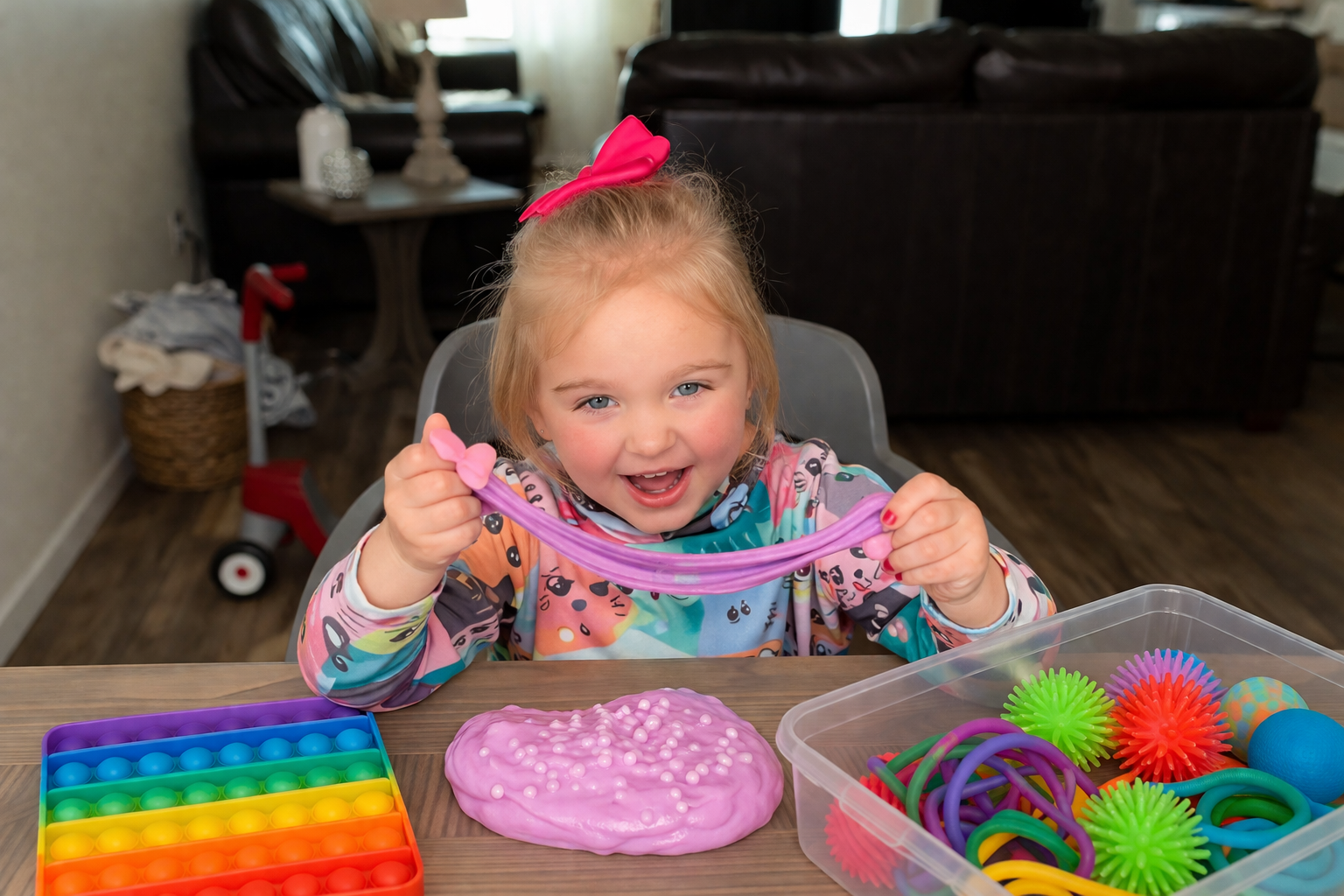
Tactile stimming involves touch and texture. A child may rub fabric, squeeze objects, touch soft items, scratch surfaces, or seek certain textures for sensory regulation.
5. Oral Stimming
Oral stimming can include chewing, licking, biting safe objects, sucking on clothing, or seeking pressure in the mouth. Safe chew tools may help when oral sensory needs are strong.
6. Auditory Stimming
Auditory stimming involves sound. A child may repeat sounds, tap objects, listen to the same noise, or enjoy certain rhythms because predictable sound can feel calming.
7. Object Stimming
Object stimming includes spinning wheels, flicking items, opening and closing objects, tapping toys, or using fidgets to support focus, waiting, or emotional regulation.
Why Types of Autism Stimming: 7 Common Types Happen
Types of Autism Stimming: 7 Common Types often happen because the nervous system is trying to regulate. A child may be seeking more sensory input, trying to block out overwhelming input, expressing excitement, reducing anxiety, or helping the brain focus.
Stimming may increase during meltdowns, transitions, crowded places, tired moments, or loud environments. It may also happen during happy moments, play, or concentration. This is why parents should look at the need behind the behavior before trying to stop it.
How to Support Types of Autism Stimming: 7 Common Types Safely
Supporting Types of Autism Stimming: 7 Common Types starts with understanding the purpose behind the behavior. Most stimming does not need to be corrected unless it is unsafe, painful, or interfering with daily life.
Helpful supports may include Sensory Tools, Toys & Fidgets, quiet spaces, movement breaks, soft textures, predictable routines, safe chew tools, or noise-reducing supports.
Learning Types of Autism Stimming: 7 Common Types makes it easier to respond with calm, supportive strategies instead of confusion.
Trusted Autism Stimming Resource
For more information about repetitive behaviors and stimming, visit the National Autistic Society stimming guide.
Types of Autism Stimming: 7 Common Types Help Explain Real Needs
Types of Autism Stimming: 7 Common Types are easier to understand when you see them as regulation, communication, and support. When parents understand the reason behind stimming, they can respond with patience, confidence, and safer support.
This content is for informational purposes only and is not a substitute for medical, developmental, educational, or therapeutic advice.