

Sensory Tools can help autistic children feel calmer, safer, and more regulated when sounds, textures, movement, stress, or busy environments become overwhelming.
Sensory Tools
Helpful autism support tools for calming, focus, comfort, movement, oral sensory needs, and daily regulation at home, school, or on the go.
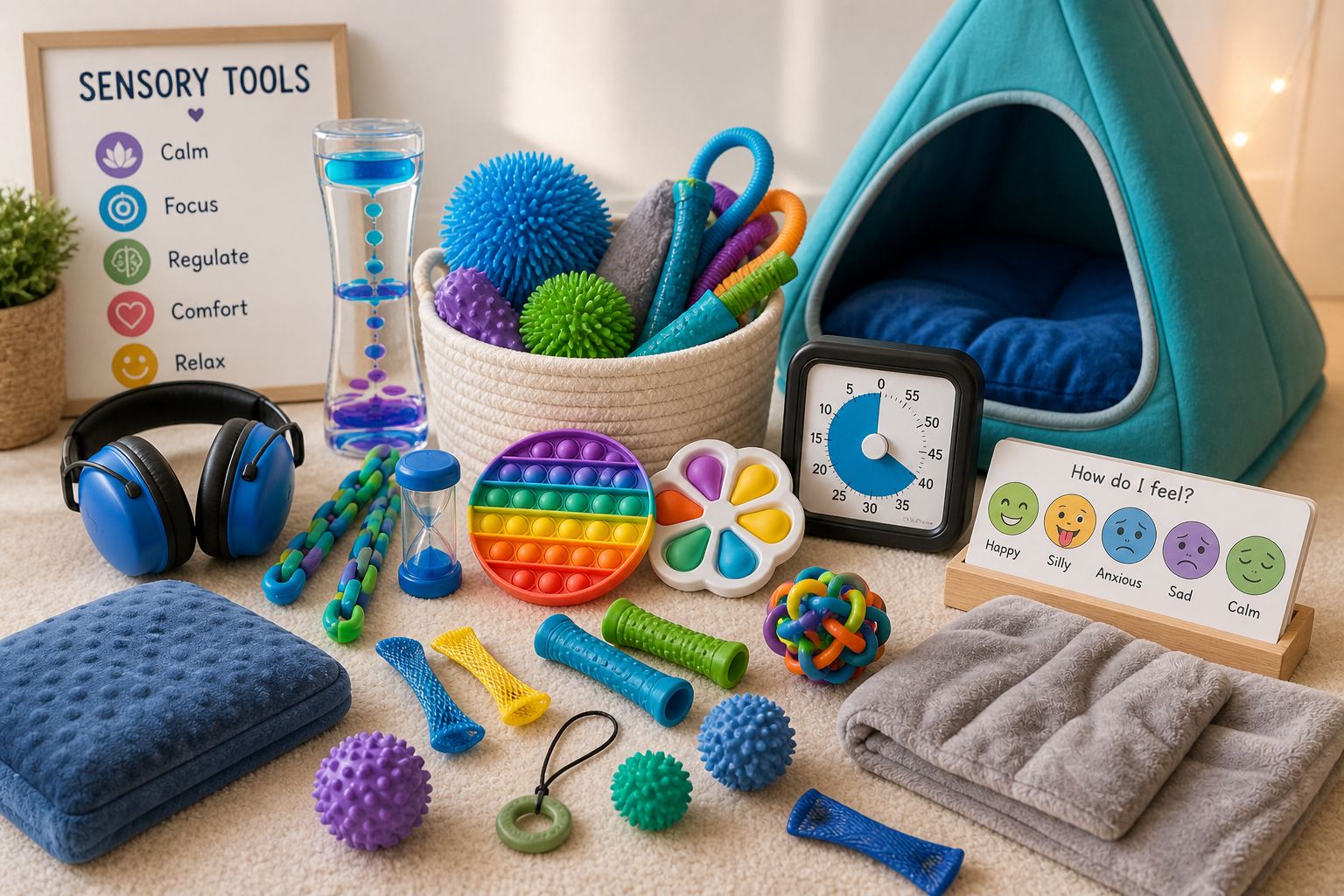
What Are Sensory Tools?
Sensory Tools are items that give children safe, controlled sensory input. Some children need something to chew, squeeze, hold, watch, move with, or sit under when their body feels overwhelmed. These tools may support touch, movement, sound, pressure, oral sensory needs, focus, and emotional regulation.
Sensory Tools are not a cure for autism, and they do not replace therapy or professional support. They are everyday supports that may help a child feel more comfortable, more organized, and better able to handle routines. When chosen carefully, they can become part of a calm-down space, bedtime routine, school plan, sensory room, or daily regulation routine.
Sensory Tools for Autism Support
Many autistic children experience sensory input differently. A sound may feel too loud, a shirt may feel scratchy, a room may feel too bright, or a busy place may feel impossible to handle. Sensory Tools can give the child’s nervous system a safer input to focus on.
Some children feel calmer with deep pressure, such as a weighted lap pad or soft compression item. Others need movement, such as a sensory swing, wobble cushion, or stretchy resistance toy. Some children need oral sensory support, such as safe chew tools. Others need quiet support, fidgets, soft textures, visual timers, or calming lights.
Calming Tools
Soft, soothing items that may help during stress, transitions, waiting, or overwhelming moments.
Fidget Tools
Small hand tools that may support focus, busy hands, car rides, homework, or sitting still.
Chew Tools
Oral sensory items for children who chew clothing, pencils, toys, or other unsafe objects.
Weighted Tools
Gentle pressure support for calming, sitting, reading, homework, or transitions.
Movement Tools
Helpful for children who seek rocking, swinging, bouncing, spinning, or body input.
Tactile Tools
Texture-based tools for children who seek touch input or struggle with certain sensations.
How to Choose Sensory Tools
The best Sensory Tools depend on the child. A child who seeks movement may enjoy a swing, wobble seat, scooter board, or stretchy toy. A child who needs pressure may prefer a weighted lap pad, compression vest, body sock, or soft squeeze item. A child who struggles with noise may need noise canceling headphones or a quieter calm space.
Start with one tool at a time. Watch how the child responds. If the tool helps them settle, focus, breathe easier, or transition with less stress, it may be useful. If it increases frustration, causes unsafe behavior, or becomes overstimulating, stop and try something gentler.
Start Small
Try one sensory tool at a time so you can clearly see what helps.
Watch Closely
A good tool should support regulation, not add more stress or pressure.
Use Safely
Always consider age, supervision, chewing habits, weight, and small parts.
When Sensory Tools May Help
Sensory Tools may be helpful during homework, school transitions, bedtime, public outings, car rides, waiting rooms, haircuts, clothing changes, dentist visits, or calm-down time. They may also be useful inside a sensory room, quiet corner, therapy plan, or daily home routine.
For children who need hands-on comfort items, you may also like our Toys & Fidgets page. For broader daily support, visit our Sensory Support guide.
Important Sensory Tool Safety Tips
Sensory Tools should always match the child’s age, strength, chewing habits, and supervision needs. Small parts may be unsafe for children who mouth or chew objects. Long cords, heavy items, or breakable pieces may not be right for every child.
Weighted items should never restrict breathing, movement, or a child’s ability to remove the item. If your child has medical needs, motor delays, breathing concerns, or strong sensory reactions, ask an occupational therapist or healthcare professional for guidance. You can also read general autism support information from the CDC autism treatment and support page.
Shop Sensory Tools
Browse calming Sensory Tools, fidgets, chew tools, weighted supports, movement items, and comfort products for children.
Shop Sensory ToolsAs an Amazon Associate, I earn from qualifying purchases.