

Creating a Sensory Safe Space helps children feel calm, safe, and supported at home with simple sensory tools, comfort items, and predictable routines.
Creating a Sensory Safe Space
Creating a Sensory Safe Space gives a child a calm place to reset, regulate, and feel more comfortable when the world feels too loud, too bright, too busy, or too overwhelming.
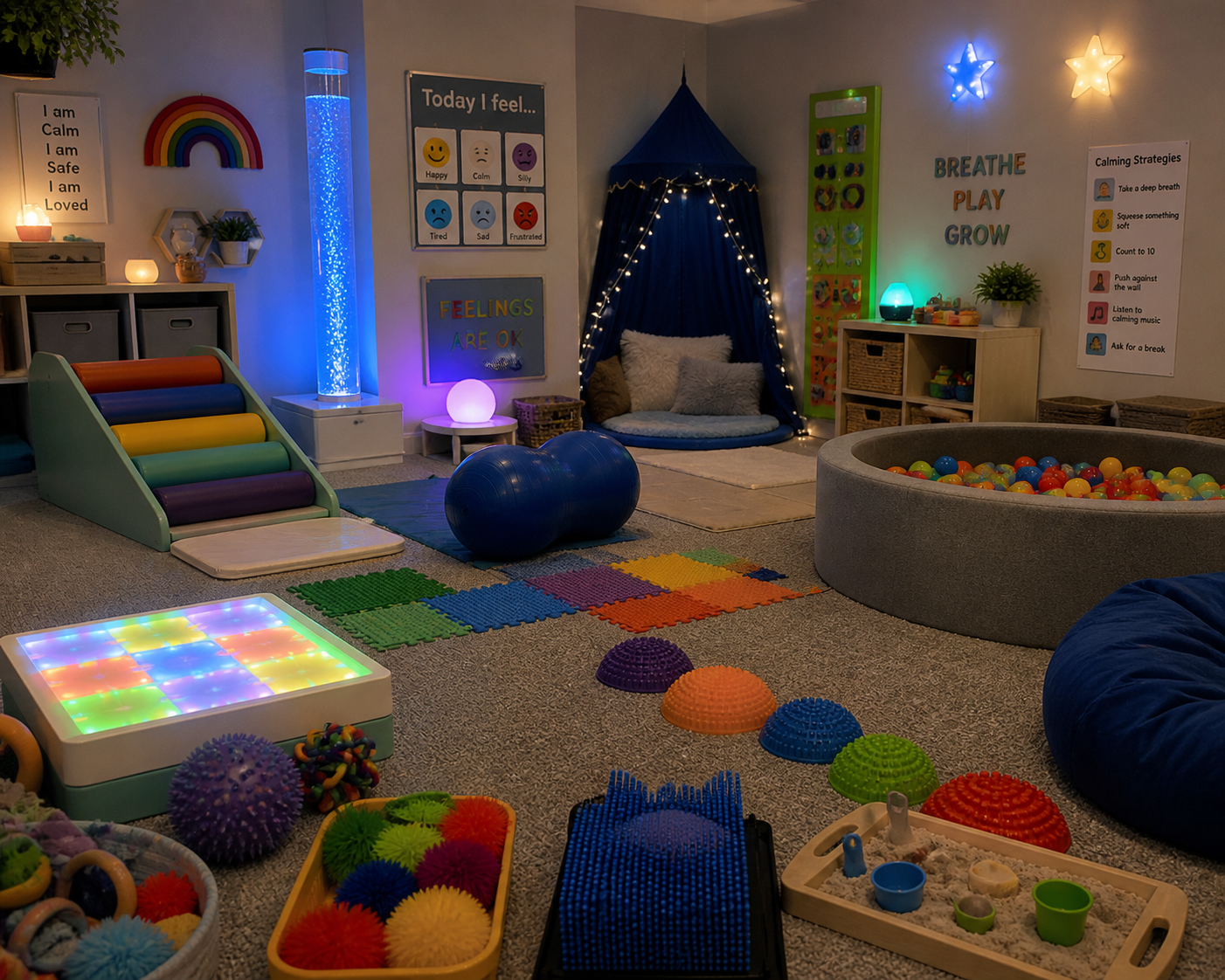
Creating a Sensory Safe Space at Home
Creating a Sensory Safe Space does not have to mean building a full sensory room. It can be a quiet corner, a cozy tent, a reading nook, a soft rug beside a bed, or a small area with calming tools. The goal is to give the child a predictable place where their body can slow down and feel safe.
A sensory safe space works best when it matches the child’s real needs. Some children need quiet and darkness. Some need movement, pressure, texture, or something soft to hold. Others need fewer sounds, fewer bright colors, and fewer demands. The best setup is not the fanciest one. It is the one the child actually uses.
What to Include in a Sensory Safe Space
Soft Lighting
Gentle lighting can make the space feel peaceful instead of overstimulating.
Cozy Seating
Bean bags, cushions, or soft chairs can help create a safe resting spot.
Weighted Comfort
Gentle pressure may help some children feel grounded and calm.
Calming Tools
Fidgets, sensory bottles, or soft textures can support regulation.
Think About the Child’s Sensory Needs
Creating a Sensory Safe Space starts with watching what helps the child calm down naturally. A child who covers their ears may need a quieter area or noise-reducing headphones. A child who seeks pressure may like a weighted blanket, body sock, crash pad, or firm pillows. A child who becomes upset in bright rooms may do better with soft lamps, blackout curtains, or dim lighting.
The space should never feel like punishment. It should not be used as a timeout corner. A sensory safe space should feel like a supportive place where the child is allowed to rest, breathe, play quietly, or recover after a hard moment.
Start simple. Add one helpful item at a time.
Simple Setup Ideas
Keep It Low-Stimulation
Use soft colors, fewer items, and gentle lighting to reduce overwhelm.
Make It Predictable
Keep the same tools in the same place so the space feels familiar.
Let the Child Choose
Notice what they naturally reach for and build around those preferences.
Creating a Sensory Safe Space Without Overdoing It
A sensory safe space does not need to be packed with products. Too many lights, sounds, toys, colors, or textures can make the area feel more overwhelming instead of calming. Start with the basics: one soft place to sit, one calming light, one comfort item, and one or two sensory tools.
If the child uses the space often, you can slowly add more support. This might include a visual timer, picture schedule, soft blanket, headphones, weighted lap pad, sensory bottle, chew-safe item, fidget toy, or calming book. The child’s reaction will tell you what belongs in the space and what needs to be removed.
The most important part is consistency. A child may feel safer when they know the sensory space is always available, always calm, and always used in a supportive way.
When a Sensory Safe Space Can Help
Creating a Sensory Safe Space may help during transitions, after school, before bedtime, during loud family gatherings, after meltdowns, or when a child needs a quiet break. Some children also use their sensory space before hard tasks, like getting dressed, brushing teeth, leaving the house, or starting homework.
The space can become part of a daily routine. For example, a child may use it for ten minutes after school, before dinner, or before bedtime. Predictable use helps the child learn that calming their body is allowed and supported.
Shop Sensory Safe Space Ideas
Browse sensory lights, cozy seating, weighted supports, fidgets, headphones, and calming tools that may help make a child’s sensory area more peaceful.
Shop Sensory Space ToolsMore Autism Support Resources
You can also visit our Understanding Autism page, explore more Autism Guides, or browse Autism Support Products for more family-friendly support.
For trusted outside information about autism and support options, visit the CDC autism treatment and support page.
This content is for informational purposes only and is not a substitute for medical, occupational therapy, educational, or professional advice.