

Understanding Autism helps families support autistic children and adults with compassion, structure, sensory awareness, and practical daily tools.
Understanding Autism
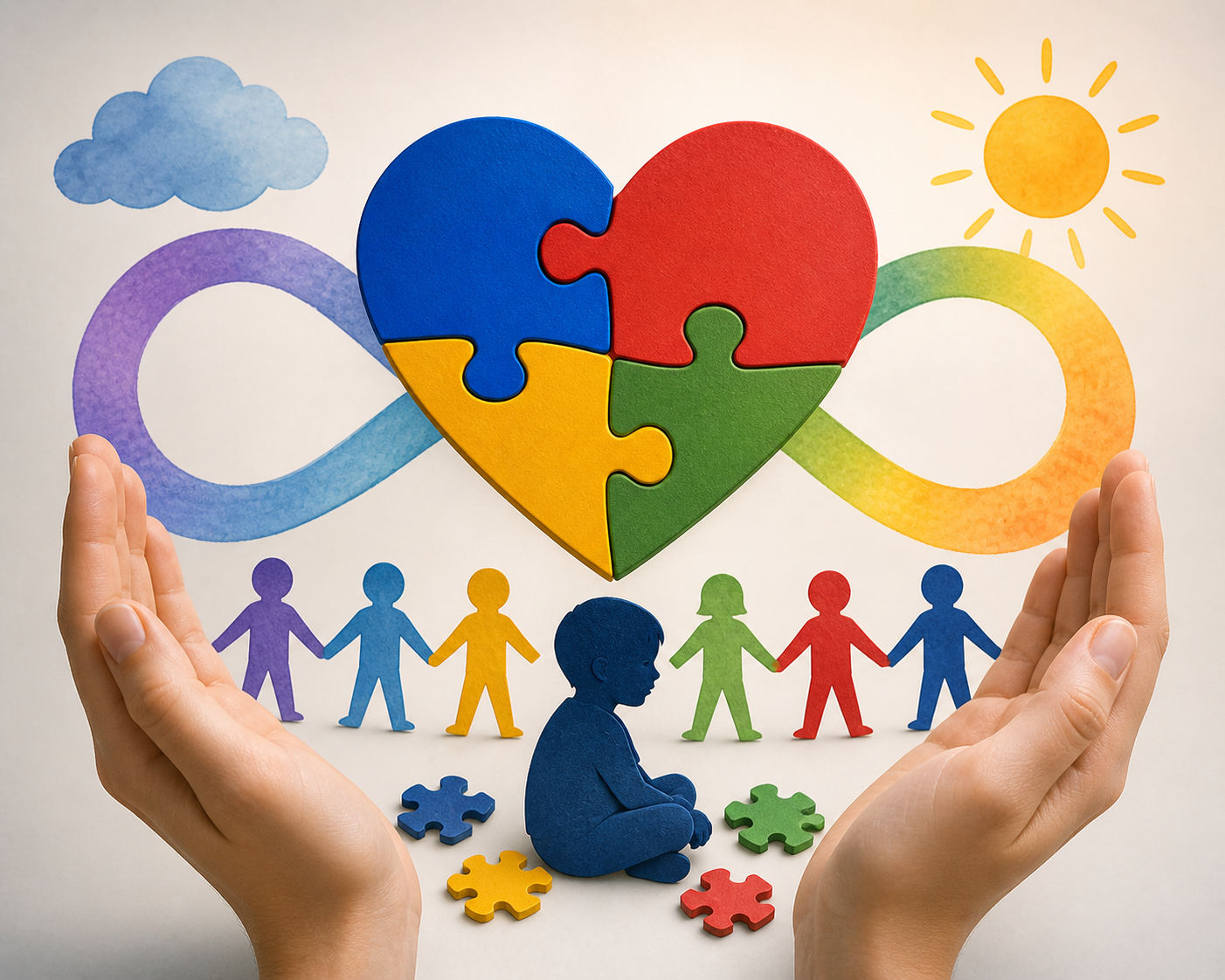
Understanding Autism can help parents, grandparents, caregivers, and teachers recognize communication differences, sensory needs, behavior signals, routines, and support tools that make daily life calmer.
Understanding Autism for Families
Understanding Autism starts with knowing that autism is a neurological and developmental difference. Autism can affect communication, behavior, learning, social interaction, sleep, eating, transitions, sensory processing, and daily routines. Every autistic person is different, so support should be based on the individual instead of assumptions.
According to the National Institute of Mental Health, autism can affect how people interact, communicate, learn, and behave. This is why Understanding Autism matters so much for families who want to respond with support instead of confusion.
For early signs, visit our Autism Symptoms page, our Signs of Autism in Toddlers page, and our Autism Guides.
Understanding Autism as a Spectrum
Understanding Autism means recognizing that autism is a spectrum. Some autistic children need daily support, while others need support only in certain situations. Some autistic people speak clearly, while others use gestures, pictures, devices, writing, or other communication tools.
A spectrum does not mean “mild” or “severe” in a simple way. It means each person has a different pattern of strengths, needs, sensitivities, communication styles, and support requirements. The goal is not to change who an autistic person is. The goal is to understand their needs and create support that helps them feel safe, respected, and capable.
Helpful Autism Support Tools
Families often use practical support tools to reduce overwhelm and make routines easier. These may include sensory tools, toys and fidgets, noise canceling headphones, sleep support, and sensory rooms.
Noise Control
Noise-reducing headphones may help reduce overwhelming sounds in stores, classrooms, restaurants, or busy environments.
Sensory Tools
Fidgets, textured toys, chewable jewelry, weighted items, and calming tools may help with regulation and focus.
Sleep Support
Calm bedtime routines, soft lighting, comfort items, and enclosed spaces may help some autistic children feel safer at night.
Sensory Spaces
A quiet sensory room or calm corner can give an autistic child a safe place to reset when the world feels too loud.
How Autism Affects Daily Life
Understanding Autism can help families see how autism may affect communication, behavior, sensory processing, food choices, clothing comfort, transitions, school, sleep, and public outings. The CDC autism overview explains that autistic people may have differences in social communication, behavior, learning, movement, and attention.
Communication
Some autistic people speak, while others use signs, gestures, pictures, writing, or communication devices.
Social Interaction
Social cues, facial expressions, tone of voice, and conversations may feel confusing, stressful, or exhausting.
Sensory Processing
Sounds, lights, textures, smells, tastes, and movement can feel stronger, sharper, or more intense.
Routine
Predictable routines can create comfort. Sudden changes may cause stress, shutdowns, or meltdowns.
Learn more about communication, auditory support, and daily living skills.
Understanding Autism and Sensory Differences
Sensory differences are a major part of Understanding Autism. An autistic child may cover their ears, avoid bright lights, dislike certain clothing, refuse certain foods, seek pressure, chew objects, rock, spin, jump, or need quiet time after being around people.
These actions are not always “bad behavior.” They may be signs that the child is trying to cope with sensory input. Helpful supports may include sensory tools, sensory rooms, and noise control support.
Sensory overload can feel like everything is happening at once.
Understanding Autism and Behavior
Behavior is often communication. When an autistic child cries, runs away, refuses, repeats actions, shuts down, or has a meltdown, they may be trying to express fear, pain, confusion, sensory overload, frustration, or a need they cannot explain with words.
Understanding Autism means asking what the behavior is trying to tell us. Is the child tired, hungry, scared, overstimulated, confused, in pain, or unable to communicate? When adults look for the reason behind the behavior, support becomes calmer and more effective.
Overwhelm
Sensory overload, noise, crowds, hunger, pain, or change can lead to distress.
Processing Time
Some autistic children need extra time to understand, answer, transition, or follow directions.
Communication Needs
Behavior may replace words when a child cannot explain what they need, feel, or want.
Repetition
Repetitive movements, routines, sounds, or interests can provide comfort, regulation, and predictability.
For more help, visit our Behavior Strategies, Behavior Support, and Managing Temper Tantrums page.
Support means meeting autistic individuals where they are.
What Autism Support Really Looks Like
Autism support is not about forcing a child to act like everyone else. Real support means creating an environment where the child can feel safe, understood, respected, and capable. This may include communication tools, calmer routines, sensory breaks, visual schedules, transition warnings, sleep support, quiet spaces, and patient adults.
Helpful support can also include sleep support tips, IEP help, and tips and advice for daily autism support.
Common Autism Misunderstandings
“They are being difficult”
They may be overwhelmed, scared, uncomfortable, tired, in pain, or unable to communicate what they need.
“They should just adjust”
Sometimes the environment needs to adjust so the autistic person can feel safe and supported.
“They do not understand”
Understanding may be present, even when the person communicates or responds differently.
“They will grow out of it”
Autism is lifelong, but the right support can improve comfort, confidence, and quality of life.
Signs of Autism in Children and Adults
Autism signs can vary by age, personality, environment, and support needs. Some signs appear early in childhood, while others become more noticeable when school, friendships, independence, or daily expectations become harder.
- Difficulty with eye contact or social interaction
- Delayed speech or unique communication styles
- Strong routines or distress when routines change
- Repetitive movements, words, sounds, or behaviors
- Sensitivity to sound, light, touch, smell, taste, or texture
- Deep focus on specific interests or topics
- Difficulty with transitions or unexpected changes
- Need for quiet spaces, sensory breaks, or calming tools
To learn more about early signs and common symptoms, visit our Autism Symptoms page.
Why Understanding Autism Matters
Understanding Autism is not about judging behavior from the outside. It is about learning what the autistic person may be experiencing on the inside. A child who refuses a shirt may be reacting to painful fabric. A child who melts down in a store may be overwhelmed by lights, noise, smells, and crowds.
When families practice Understanding Autism with compassion, they can reduce shame, choose better support, create calmer routines, and help autistic children and adults feel safer in everyday life.
Understanding Autism Can Change Daily Life
Understanding Autism gives families a better way to respond. Instead of seeing only behavior, families can look for sensory needs, communication needs, routine changes, stress, pain, fear, or overwhelm.
Continue with our Autism Guides, Sensory Tools, and Sleep Support pages.